Pentatonic Scale Guitar Guide: From Box to Music
The minor pentatonic scale becomes useful when you can hear its root, control its rhythm and aim phrases at the chord. Learn one shape thoroughly, then connect it sideways through real musical phrases.
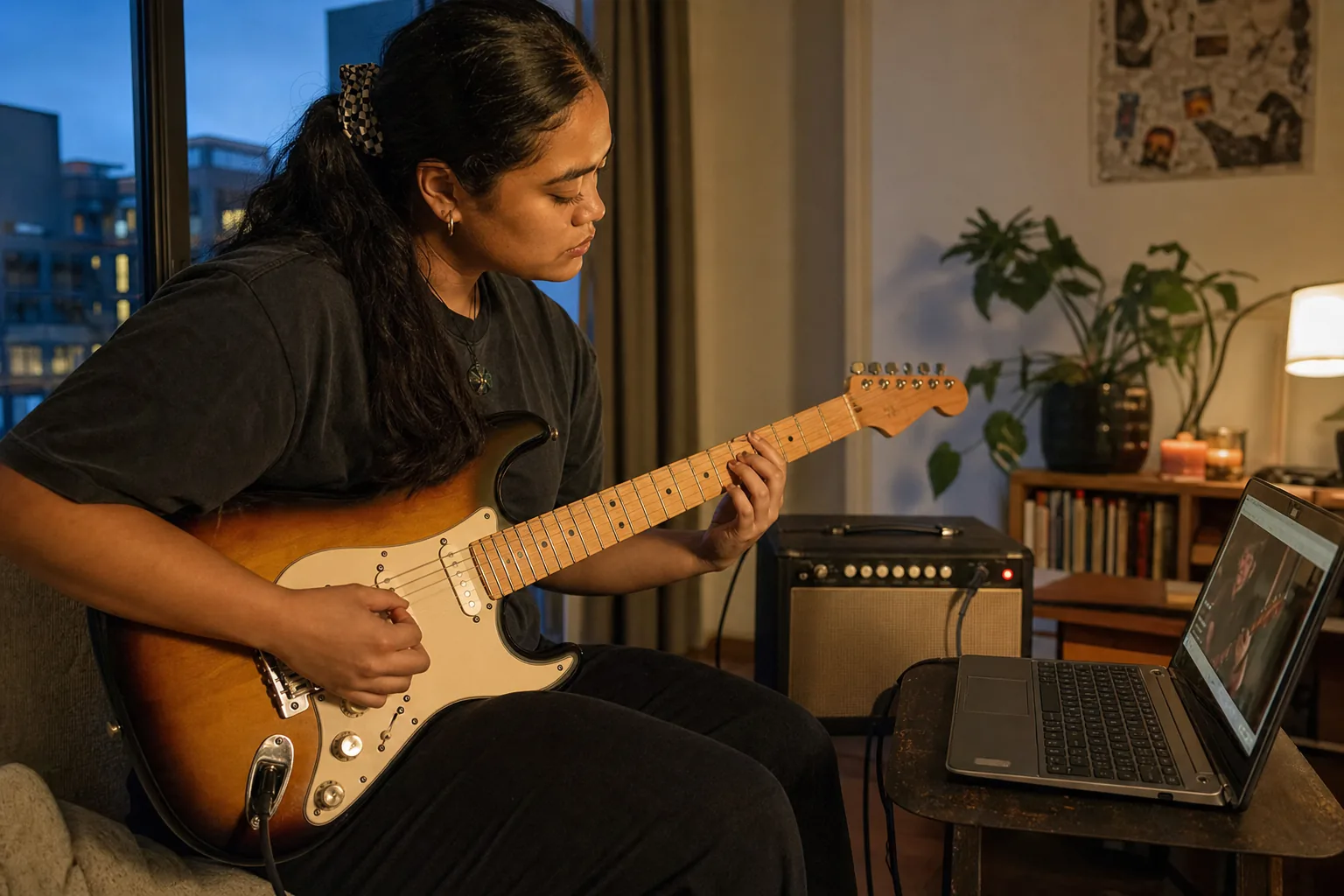
Why this feels difficult
Many players can play a box up and down but freeze over a backing track. The missing skill is not another scale pattern—it is turning choices into phrases.
Land deliberately rather than treating every note as equal.
Repeat a rhythmic idea before changing the notes.
Bends need a target pitch; check them against the fretted note.
Move between positions because the phrase needs it, not to prove you know them.
A sensible learning path
- 1Map the root inside one position.
- 2Write a two-note rhythmic motif.
- 3Answer it with a different ending.
- 4Target a chord tone, then extend the phrase into a neighbouring position.
Where a live teacher changes things
Live feedback can separate a note-choice problem from a bend, vibrato or timing problem.
You learn directly with your teacher. Your teacher does not change from week to week, so each lesson can build on what happened last time.
Questions students ask
Why does the pentatonic scale sound like an exercise?+
Running the shape continuously gives every note equal weight. Musical phrasing needs rhythm, space, repetition and deliberate destinations.
How should I practise bends in the pentatonic scale?+
Play the target pitch as a fretted note first, then bend up and compare until the pitch matches.
When should I connect pentatonic positions?+
Connect positions when a musical phrase needs a different register, not simply to display another pattern.