How to Learn Guitar: A New Zealand Beginner’s Guide
The most reliable way to learn guitar is to choose a small musical goal, practise consistently and get feedback before inefficient habits settle in. Start with a playable instrument, tuning, relaxed movement, rhythm and one complete piece of music.
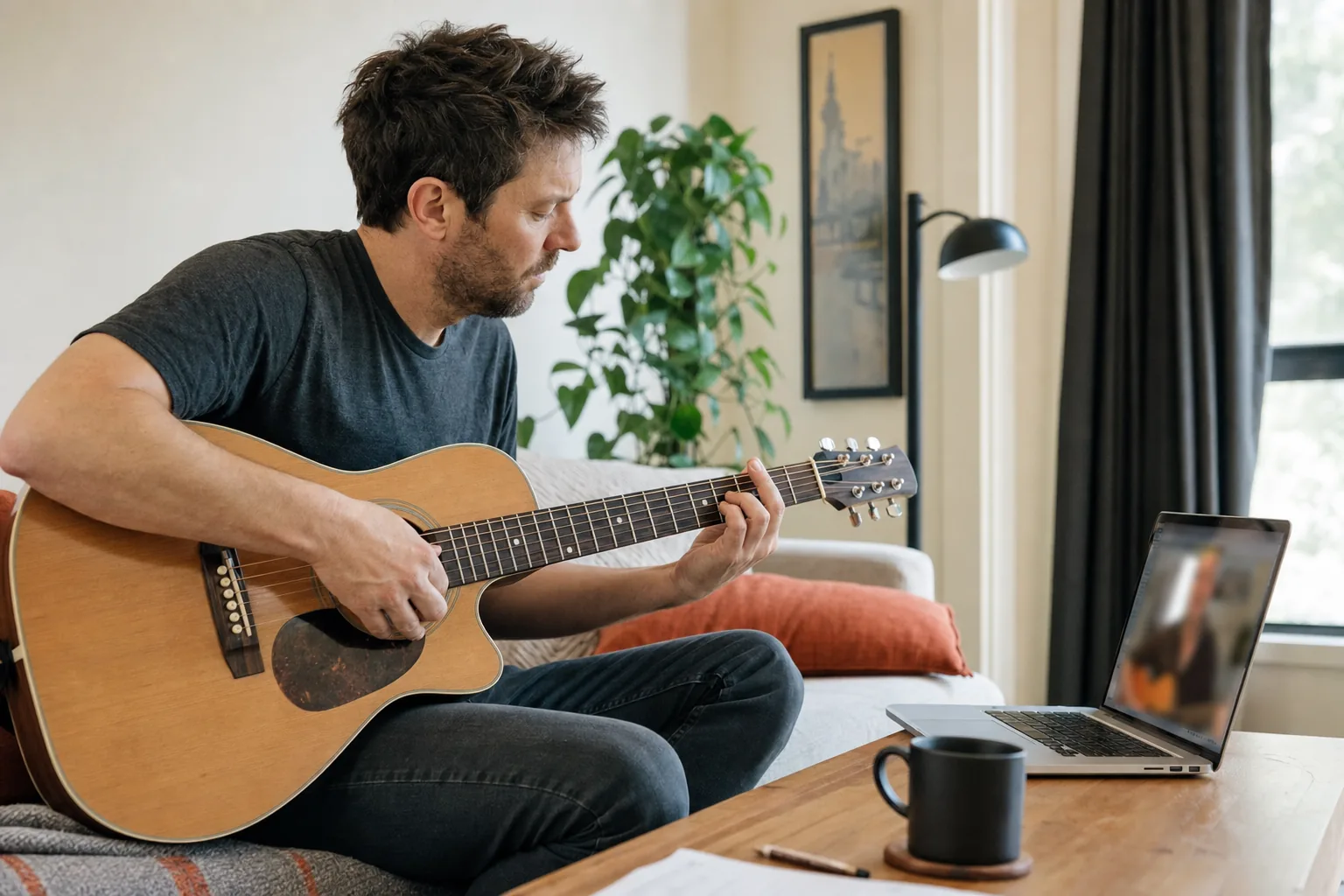
Why this feels difficult
Beginners often try to learn chords, scales, tabs, theory and songs simultaneously. That creates activity without a clear test of progress. A better plan gives each new idea a musical job.
Pick acoustic or electric according to the music you want—not a rule about what beginners should use.
Learn to tune before judging your sound.
Keep the first repertoire simple enough to maintain pulse.
Measure progress by what you can play cleanly and continuously, not how many tutorials you watched.
A sensible learning path
- 1Set up and tune a guitar that is comfortable to play.
- 2Learn one riff or two-chord groove with steady time.
- 3Join sections until you can play a complete short song.
- 4Add one new technique or musical idea at a time.
Where a live teacher changes things
A teacher can identify the high-impact correction you cannot see or hear yet.
You learn directly with your teacher. Your teacher does not change from week to week, so each lesson can build on what happened last time.
Questions students ask
What should a new guitarist learn first?+
Start with tuning, relaxed movement, steady rhythm and one small riff or chord progression that becomes real music.
How quickly can I learn guitar?+
Progress depends on the goal, instrument and practice consistency. A small weekly target is more useful than a guaranteed timeline.
Can I teach myself guitar?+
Yes, but recording yourself and seeking feedback can help identify timing or movement problems that are difficult to notice alone.